



Where is the garden?
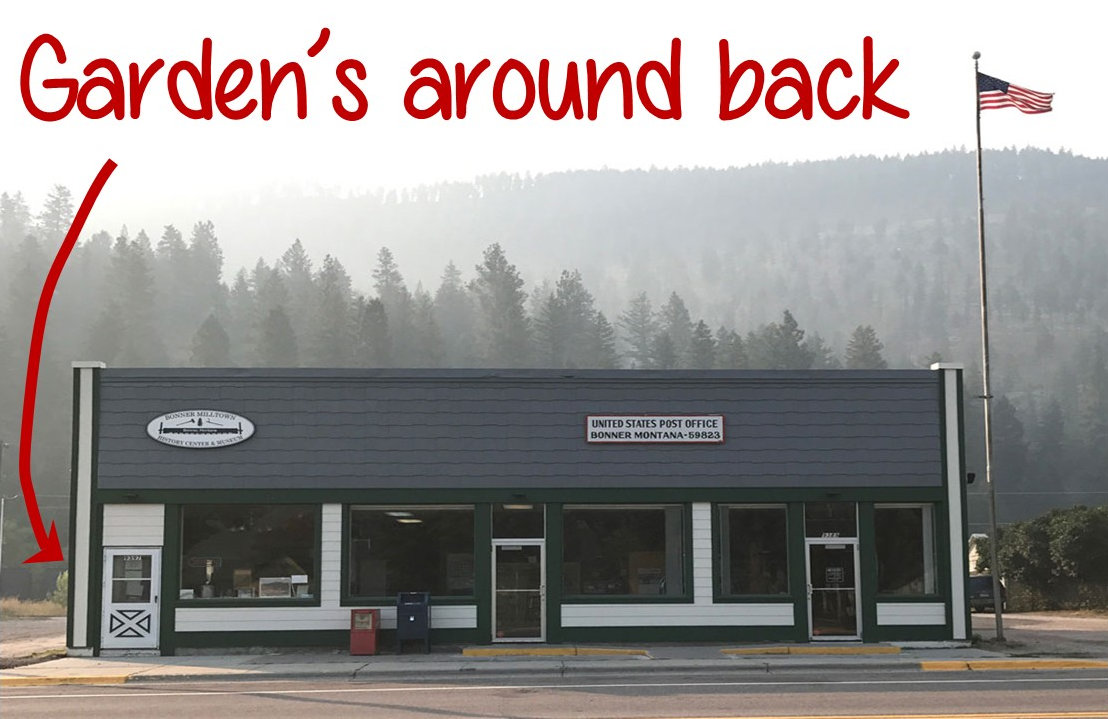
It’s right behind the historic Bonner post office on Highway 200, at 9397 MT Highway 200 E. The building also houses the Bonner Milltown History Center & Museum. (Email them or visit their Website.)

What’s in the garden?
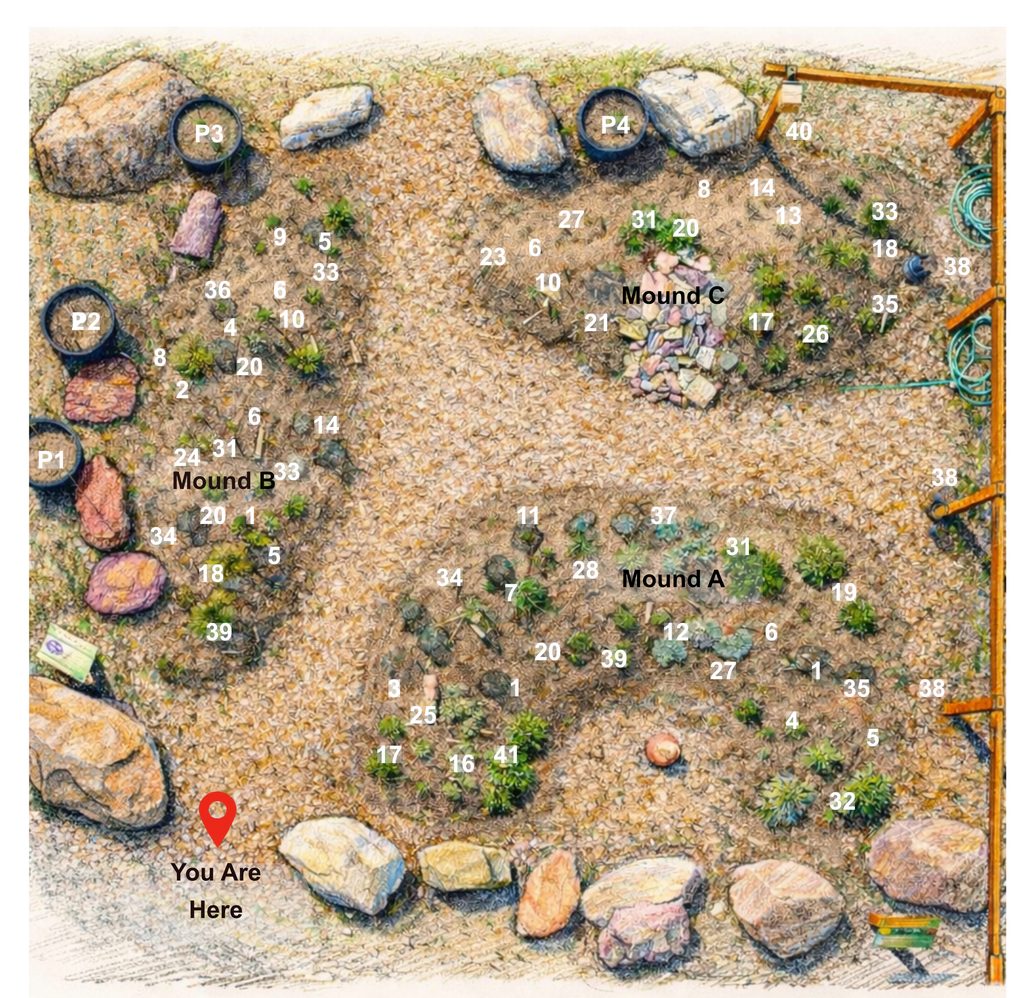
The garden has three sections: Mounds A, B & C, as well as four planters.
Use the alphabetical plant list below to find which mound a plant is growing on, & its approximate location on that mound. For example, “3. Bitterroot – A” — Look for #3 on the map of Mound A.
Some plants grow on more than one mound. For example, “6. Bluebunch wheatgrass – A, B & C” — Look for #6 on the map of each mound.
Download the garden map & plant list.
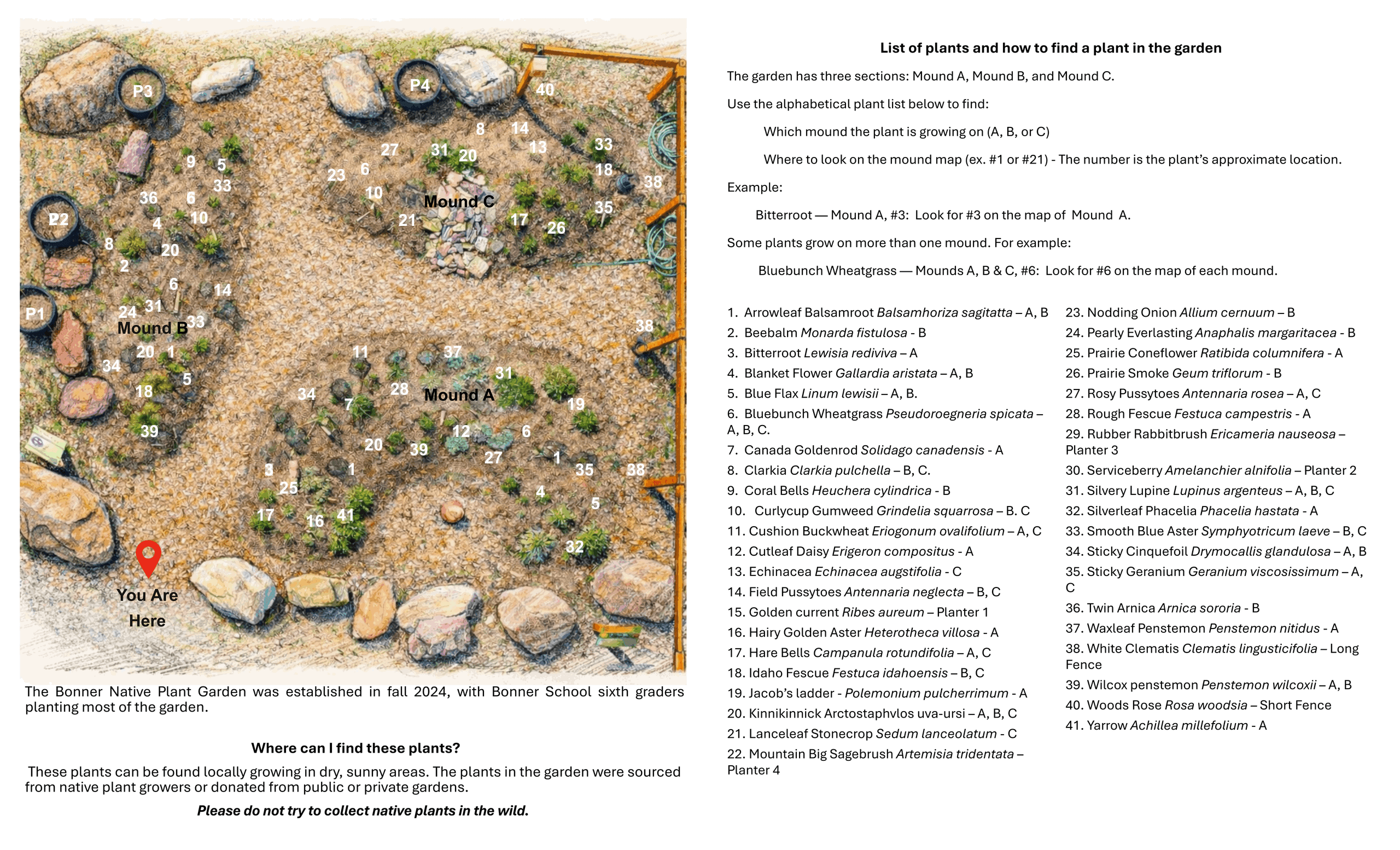
Click here for the garden map & plant list
- Arrowleaf balsamroot, Balsamhoriza sagitatta – A, B
- Beebalm, Monarda fistulosa – B
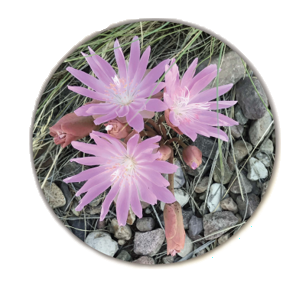
- Bitterroot, Lewisia rediviva – A
- Blanket flower, Gallardia aristata – A, B
- Blue flax, Linum lewisii – A, B
- Bluebunch wheatgrass, Pseudoroegneria spicata – A, B, C
- Canada goldenrod, Solidago canadensis – A
- Clarkia, Clarkia pulchella – B, C
- Coral bells, Heuchera cylindrica – B
- Curlycup gumweed, Grindelia squarrosa – B, C
- Cushion buckwheat, Eriogonum ovalifolium – A, C
- Cutleaf daisy, Erigeron compositus – A
- Echinacea, Echinacea augstifolia – C
- Field pussytoes, Antennaria neglecta – B, C
- Golden current, Ribes aureum – Planter 1
- Hairy golden aster, Heterotheca villosa – A
- Hare bells, Campanula rotundifolia – A, C
- Idaho fescue, Festuca idahoensis – B, C
- Jacob’s ladder, Polemonium pulcherrimum – A
- Kinnikinnick, Arctostaphvlos uva-ursi – A, B, C
- Lanceleaf stonecrop, Sedum lanceolatum – C
- Mountain big sagebrush, Artemisia tridentata – Planter 4
- Nodding onion, Allium cernuum – B
- Pearly everlasting, Anaphalis margaritacea – B
- Prairie coneflower, Ratibida columnifera – A
- Prairie smoke, Geum triflorum – B
- Rosy pussytoes, Antennaria rosea – A, C
- Rough fescue, Festuca campestris – A
- Rubber rabbitbrush, Ericameria nauseosa – Planter 3
- Serviceberry, Amelanchier alnifolia – Planter 2
- Silvery lupine, Lupinus argenteus – A, B, C
- Silverleaf phacelia, Phacelia hastata – A
- Smooth blue aster, Symphyotricum laeve – B, C
- Sticky cinquefoil, Drymocallis glandulosa – A, B
- Sticky geranium, Geranium viscosissimum – A, C
- Twin arnica, Arnica sororia – B
- Waxleaf penstemon, Penstemon nitidus – A
- White clematis, Clematis lingusticifolia – Long Fence
- 39. Wilcox penstemon, Penstemon wilcoxii – A, B
- Woods rose, Rosa woodsia – Short Fence
- Yarrow, Achillea millefolium – A
Tell me more!
The Bonner Native Plant Garden was established in fall 2024, with Bonner School sixth graders doing most of the planting. These plants grow locally in dry, sunny areas. Download the brochure here.
In some Native languages the term for plants
translates to ‘those who take care of us.’”
Robin Wall Kimmerer from Braiding Sweetgrass: Indigenous Wisdom, Scientific Knowledge, and the Teachings of Plants