



Since 2019, MNPS and the Montana Natural Heritage Program have been developing a program to involve citizen scientists to help land management agencies and landowners carry out native-plant-focused projects.
The point is to gather information to update Montana’s aging dataset about where rare plants were known to occur, but have not been visited for 20 to 50 years. There are well over 400 such plant species in Montana. MNPS members are being recruited and trained to go find them! It’s a treasure hunt!
For more information, continue reading below & see “Documents.” If interested, contact program coordinator Grace Hoelscher (grace.hoelscher@mt.gov) or Andrea Pipp (apipp@mt.gov). We have all the Citizen Botany applicants that we can handle in 2026 – we’re full. If you’re interested in becoming a Citizen Botanist, we’ll start taking applications again in January 2027.
How it works
To become a Citizen Botanist, a volunteer must first meet the basic requirements:
- Have completed at least one science class at the high school level or above;
- Be familiar with botanical terms and the process to identify plants – or be willing to learn;
- Be able and willing to follow monitoring protocols; and
- Be able and willing to work independently outside.
- Attend the online two-part training; and
- Sign the data use agreement.
The data use agreement amounts to a code of ethics.
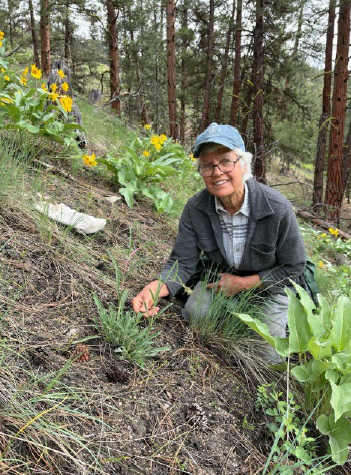
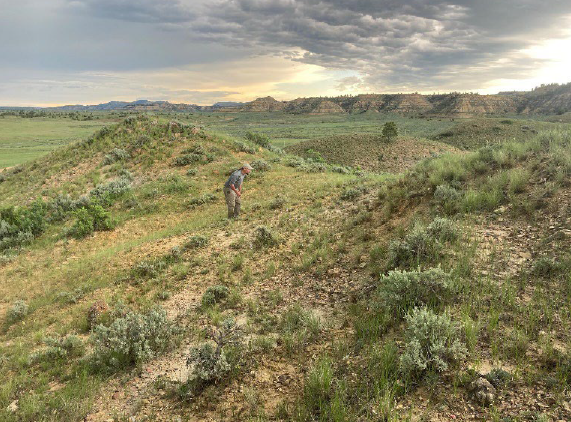
After that, the Citizen Botanist is given access to a spreadsheet of rare plants. They choose at least one plant in at least one place – a “Species Occurrence” (SO), which is a specific area where a particular plant was documented to exist. The SO must fit with the volunteer’s skills at identifying plants, and be in a place where they are willing & able to go. It’s essential that visits are planned for when the Citizen Botanist can go, and also at a time when the plant is readily identifiable, such as when it’s in bloom.
Next, a coordinator verifies the assignment and provides more information to the Citizen Botanist, including historic observation data.
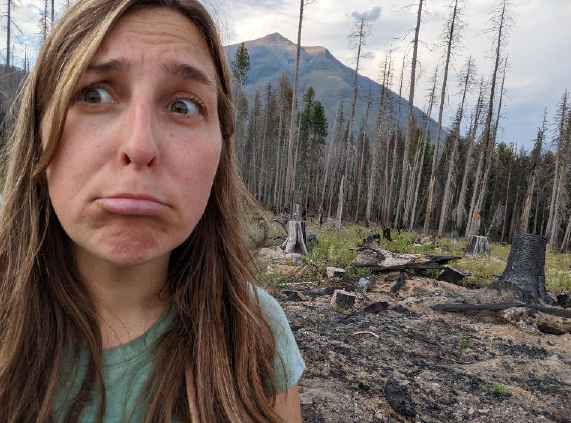
The Citizen Botanist then plans the visit, reaching out to a local agency contact. They visit the SO and conduct a survey to collect the information they learned about during training. They look for the target plant, take photographs, and fill out a form describing current conditions, mapping and threats. If they don’t find their target plant — like the Citizen Botanist in the photo to the right — then they document its absence.
Survey data is submitted to the Montana Natural Heritage Program where it is reviewed and recorded in their database. The information is made available to resource managers, private industry, and the public to support and promote informed stewardship of Montana’s natural resources.